
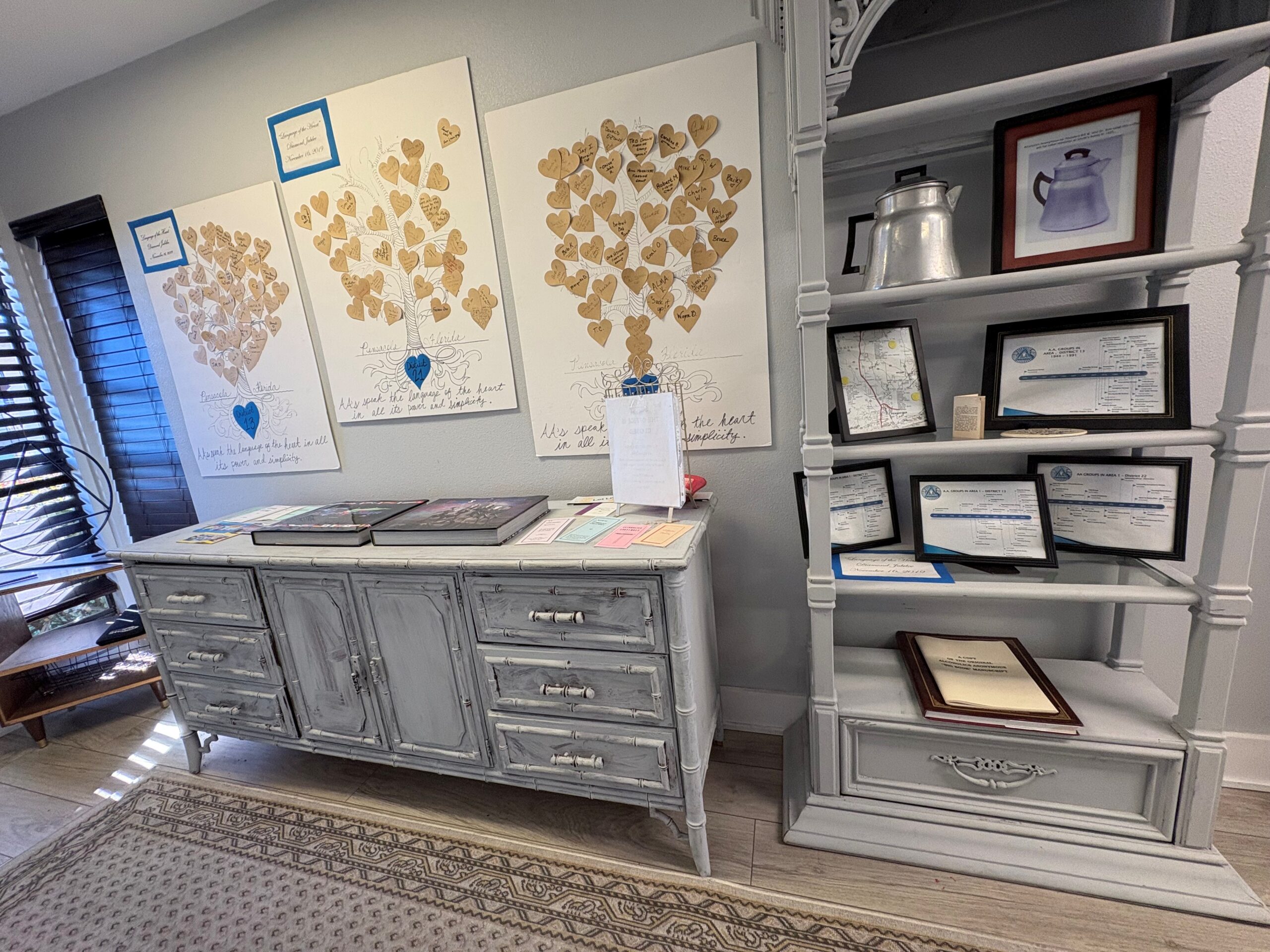
The Central Office includes a small but meaningful Archives & History area that reflects Alcoholics Anonymous’ shared story—both locally and worldwide. These displays are maintained with care and offer a glimpse into AA’s growth, service, and enduring principles.
This collection is available to view in person at the Central Office and is shared as part of AA’s ongoing commitment to unity, service, and remembrance.
Voices and Stories in Print
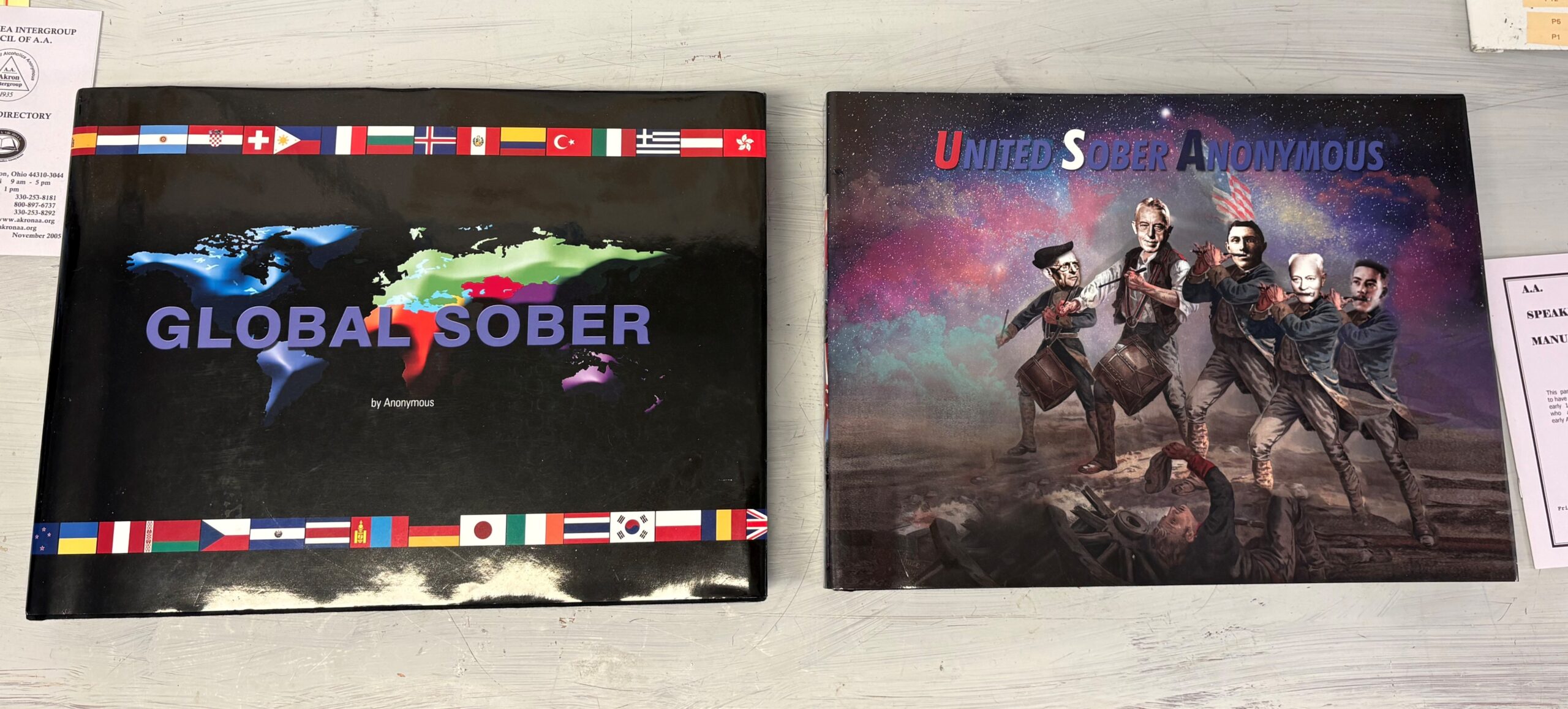
Among the archival materials on display are books that reflect the broader recovery experience and the many voices that have contributed to sober living and mutual support over time.
Titles on display include United Sober Anonymous and Global Sober. These works explore recovery through shared experience, emphasizing unity, connection, and the common language of sobriety that transcends geography and background.
While Alcoholics Anonymous literature remains central to the Fellowship, these additional works reflect how recovery conversations have continued to grow and reach people around the world.
Early Public Awareness and Recorded Voices
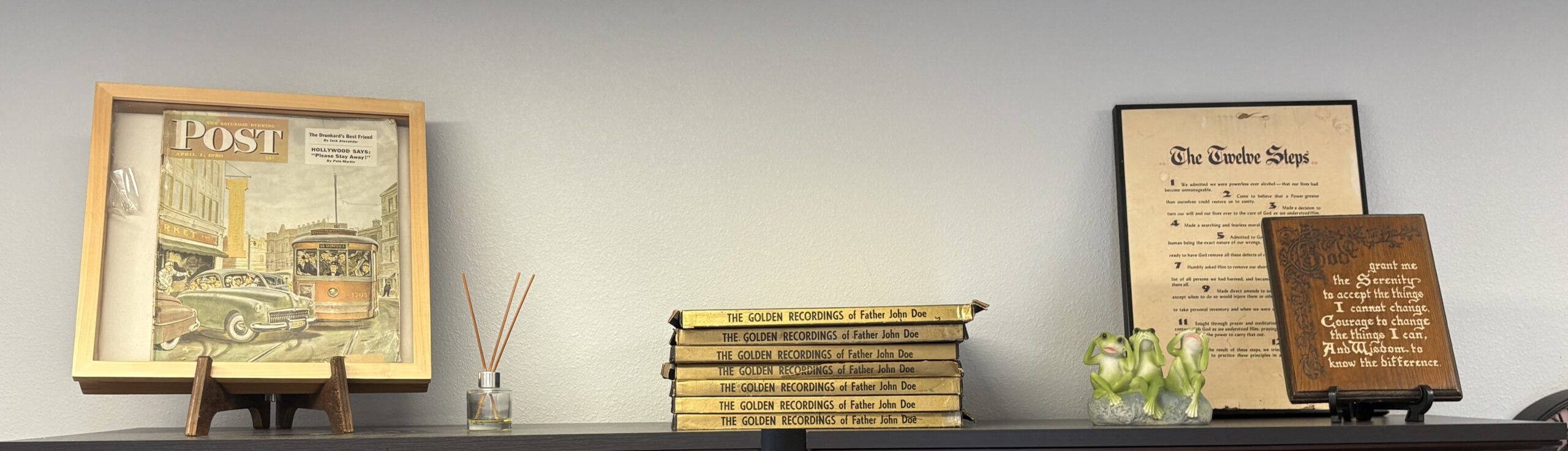
This section highlights how recovery and sobriety began to enter public awareness during the early years of Alcoholics Anonymous.
On display is an issue of The Saturday Evening Post, a widely read publication that helped shape American culture throughout the twentieth century. Articles and illustrations from publications like this reflect a time when conversations around alcohol and recovery were slowly entering the public eye.
Also included are recordings associated with Father John Doe, an early supporter of Alcoholics Anonymous whose recorded talks helped spread understanding of AA’s principles during its formative years. These recordings represent some of the earliest efforts to share the message beyond meeting rooms and local communities.
A Simple Coffee Pot, A Lasting Fellowship
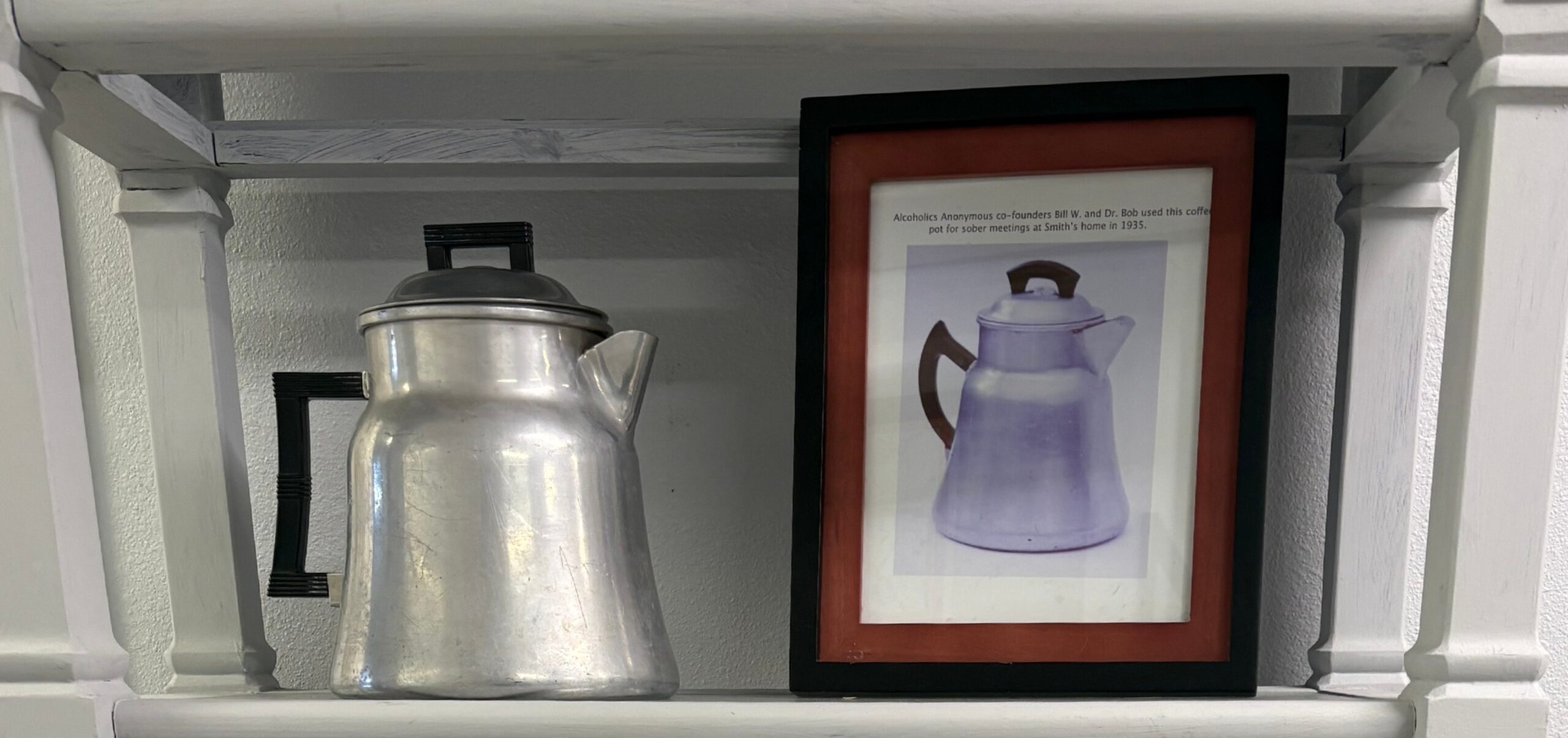
One of the most meaningful items on display is a coffee pot associated with Alcoholics Anonymous co-founders Bill W. and Dr. Bob.
According to the accompanying display, this style of coffee pot was used during early sober meetings held in Dr. Bob’s home in 1935. Simple gatherings like these—centered around conversation, hospitality, and shared experience—became the foundation of what Alcoholics Anonymous would grow into worldwide.
This item serves as a reminder that AA began not in large halls or institutions, but in ordinary homes, through ordinary people helping one another stay sober.
The Original Words That Started It All
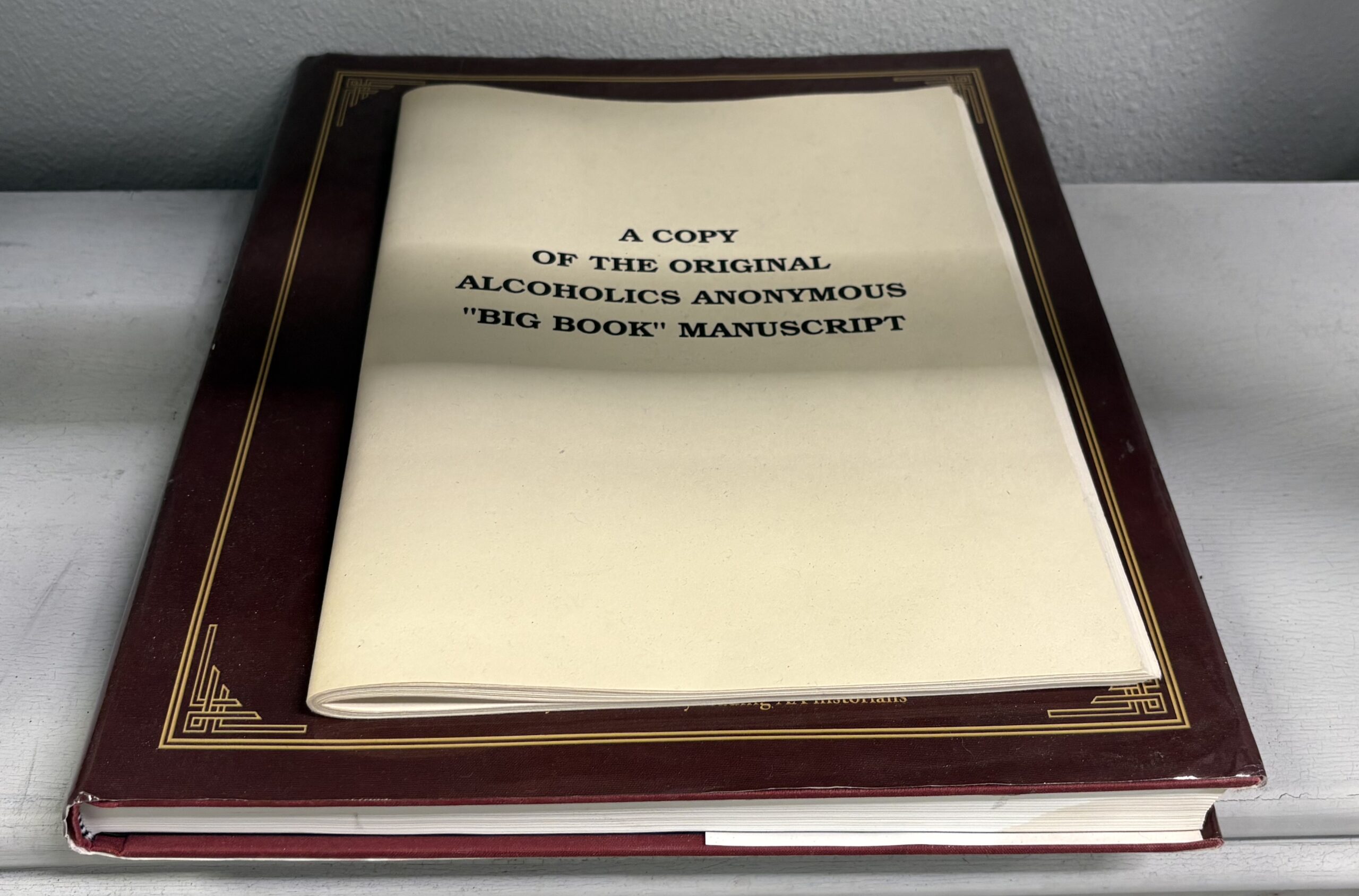
Also on display is a copy of the original Alcoholics Anonymous “Big Book” manuscript.
This manuscript reflects the earliest written form of the ideas, principles, and shared experiences that would later become Alcoholics Anonymous. While the Big Book has since been published and distributed worldwide, this display highlights the careful thought and collaboration that shaped its original language.
The manuscript serves as a powerful reminder of how AA’s message was first put to paper—and how those words have continued to help countless individuals over the decades.
These archival items are shared as part of the Central Office’s ongoing service to the Fellowship. Visitors are welcome to view the Archives & History area during regular office hours and learn more about AA’s shared journey.